Production Notes
All guitars, programming, keyboards: PS Perkins
All drums and percussion, keyboards: R Thomas
Hypno-vocal chanting: Sabin Thomas
Mixed and mastered by Mystic Tape Deck ©2020
Lyric Sheet
All you fallen down spirits
Come rise from your stoned over graves
Come dance with the firelight
As it flickers on the walls of my cave
Stone grown to bone intone
Simulacra whose shadows disconnect
Draw breath and draw pause
To the laws of cause and effect
Nothing can breathe in this air
Statues of lovers
Whose eyes remain locked in a stare
Something is coming I can smell it on the breeze
Something which frightens the animal in me
Shot through the heart with your poison tipped arrows
And the eyes of the eagle are fixed on the sparrow
Burning the maps and connections
To lands long forgot
All the loose ends
To be swept up and tied in a knot
Oceans of causes
Which ripple and steadily swell
All of us captured, enraptured
Still under the spell
Nothing can grow in this soil
Earth has been salted
And yet we unceasingly toil
Something is coming I can hear it in the night
Stalking in the shadows with its eyes glowing bright
Sewn into our comforts we do as we please
Treating the symptoms, ignoring the disease
Addendums
The Doctrine of Reflection teaches that visible events are reflections of deeper causal architectures. Wars, witch hunts, revolutions, economic systems, religions, myths—even songs—are not the disease. They are manifestations. To study only the manifestation is to mistake the shadow for the object casting it.
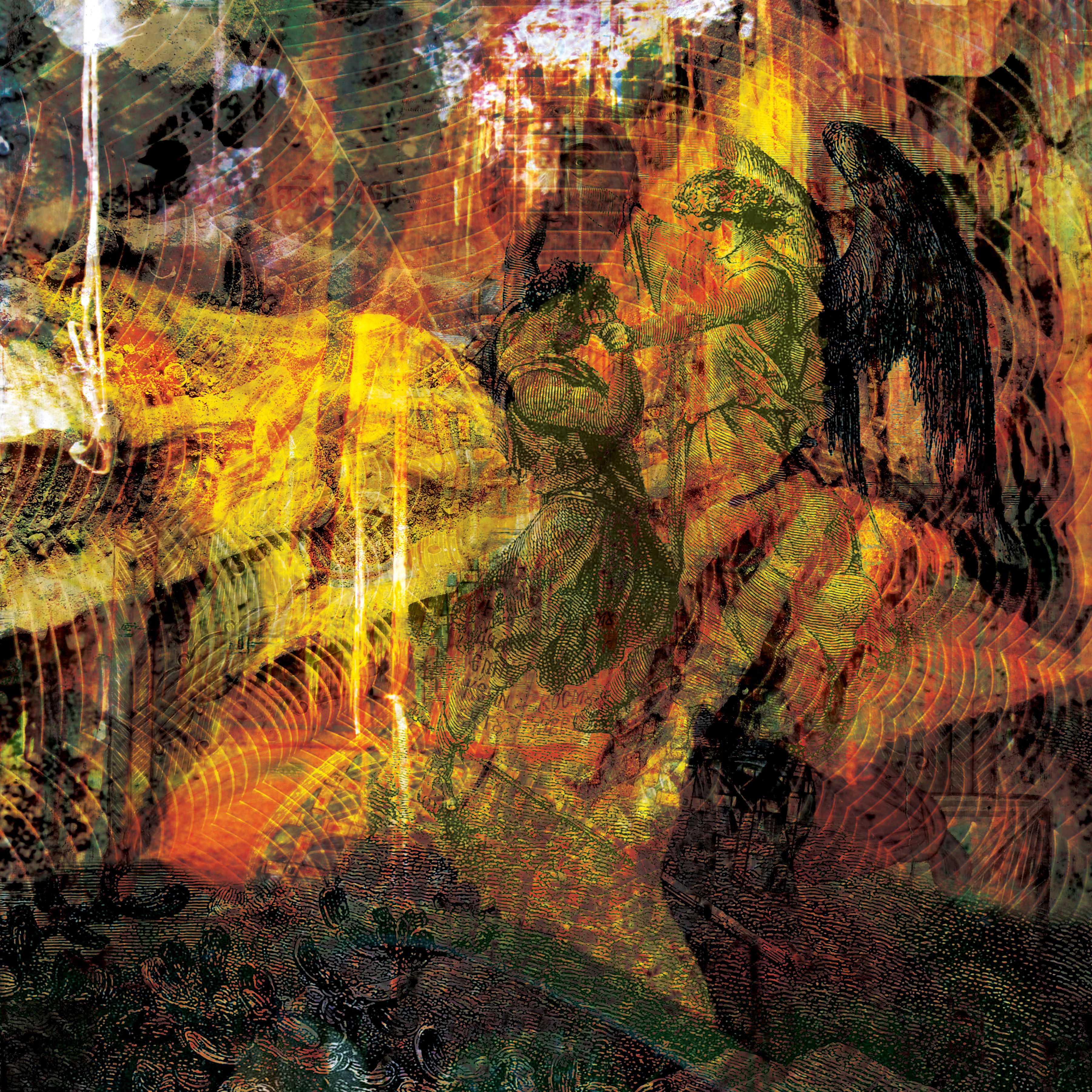

BARDS: Of The Morning Star
Of The Morning Star is generally regarded as the foundational musical text of the Nazilic tradition. More than a collection of songs, it presents a complete cosmology in thirteen movements
Buy on BandcampMarginalia
Annotation 01-08A: The Cave of Returning
Bell scholars have traditionally distinguished this cave from the numerous subterranean chambers appearing elsewhere throughout the Archive. Earlier descents are generally associated with grief, necromancy, or concealment. This fragment instead presents the cave as a place of voluntary withdrawal preceding transformation. Several commentators have compared the episode to the symbolic retreats of prophets, hermits, and initiates across many religious traditions, though Nazilic philosophy departs from these precedents in one important respect. The Shining One does not enter the cave to escape the world. He enters because he has finally accepted that he cannot change the world until he has first been changed by it.
Annotation 01-08B: The Fortune Teller's Warning
Surviving Eastman fragments associate this composition with an encounter between the Shining One and an unnamed Romani diviner whose reading reportedly consisted of only a single sentence before she abruptly ended the consultation. Although no version of that sentence survives, Bell historians generally agree that the vision concerned not a single catastrophe but an entire sequence of converging causal collapses extending centuries into the future. Later Bell archivists would repeatedly emphasize that prophecy within Nazilic doctrine does not reveal immutable destiny. It reveals trajectories.
As Bell philosopher Virginia Bellwether observed:
"A map is not a prison.
It merely shows where the cliffs already are."
Annotation 01-08C: Statues That Draw Breath
The opening invocation has prompted sustained comparison with later Library traditions concerning simulacra, recursive memory, and the awakening of stone figures beneath the earth. Most scholars reject a literal interpretation. Instead, the statues are generally understood as fixed identities—beliefs, institutions, or civilizations—that have forgotten they were once alive. The command to "rise from your stoned over graves" therefore functions less as resurrection than as reanimation of possibility itself.
Annotation 01-08D: The Disease Beneath the Symptoms
The fragment concludes with one of the earliest surviving expressions of what later Bell philosophers would call Causal Medicine. Throughout Nazilic literature, suffering rarely originates where it first appears. Wars, persecutions, economic collapse, ecological destruction, and personal despair are consistently described as symptoms rather than causes. The Shining One's growing horror stems from recognizing that humanity repeatedly mistakes consequence for origin. Bell scholars have frequently argued that the entire work of the Cloak—from Phenominomics to the Nectar Collectors—constitutes an attempt to diagnose the deeper illness concealed beneath visible events.
Bell Archive Note P-41 concludes:
"History rarely bleeds where it was wounded."
Annotation 01-08E: The Smell Upon the Breeze
Perhaps the fragment's most subtle image appears in the repeated assertion that catastrophe may first be smelled or heard before it can be seen. Bell commentators have long regarded this as an early description of what later Encroachments termed a causal correction—the intuitive bodily sensation preceding conscious recognition of an approaching convergence. Long before the Bell rings, before the Mirror reflects, or before the Library records, the body itself becomes the first instrument to perceive that history has begun quietly turning.