Production Notes
Guitars, Bass, percussion blocks, vocals: PS Perkins
All other drums and percussion: R Thomas
Lyric Sheet
Upon the journey we embark, following the spark
And the ember which guides us to the flame
Strange voices join the choir, setting the world on fire
To name the one which has no name
They sing their secret chord
The one which “pleased the lord”
In tones our ears weren’t designed to recognize
Gather by the water on the moonless night
to witness the sacred rite
All praying for the angels to be exorcised
Part the veil: In the spiral of the snail
See the snake that swallowed its tail
Aaaah...aaah...aaaah...
Drink the tincture from the vial
Seize the key and turn the dial
And part the veil: In the spiral of the snail
See the snake that swallowed its tail
Place the sigil upon the gate to ward all the fiends away
“Their ears will melt and then their eyes”
With the incantation spoken, the crucible is broken
Unleashing odd inhuman cries
Three times they’ll hold you down,
And just before you drown
The light begins to flood your eyes
Two marks upon your head
“The King in yellow and the Queen in red”
And now your journey has just begun
Part the veil: In the spiral of the snail
See the snake that swallowed its tail
Aaaah...aaah...aaaah...
Drink the tincture from the vial
Seize the key and turn the dial
And part the veil: In the spiral of the snail
See the snake that swallowed its tail
Addendums
Up until now, the rituals of the Cloak have largely been talked about. Here, for the first time, we glimpse one from the inside—but only through the sensory impressions of someone undergoing it. The scholars can identify symbols and compare fragments, but they can't reconstruct the experience itself. That preserves exactly the kind of mystery that real esoteric traditions tend to have: the rite remains just beyond the reach of documentation, surviving only in echoes, songs, and the occasional contradictory field report.
BARDS: Of The Next Revolution
The second vessel in the BARDS series follows humanity's gradual rediscovery of memory, creativity, and purpose after yet another civilizational collapse.
Buy on BandcampMarginalia
Annotation 02-7A: The Rite Beneath the Water
While the attached note warns that few trustworthy details about Nazilic initiations survive, this manuscript has always been considered the nearest equivalent to the “Rite of the Spiral” as defined by later Bell archivists. The series of symbols, including water, fire, tincture, key, veil, spiral, drowning, and awakening, has shown up with striking regularity in accounts of initiations from different sources that are otherwise unrelated and span centuries. Whether this writing contains an authentic liturgy or only a poetic reconstruction is impossible to determine at this point. The Bell Family catalogues categorize it as adjacent to liturgical texts.
Annotation 02-07B: Following the Spark
The opening image of "following the spark" has generally been interpreted as one of the earliest references to what later Phenominomic writers would identify as the Shard Impulse—the involuntary attraction toward meaningful coincidence. Unlike conventional pilgrimage traditions, the initiate is not depicted as choosing a destination. Rather, the spark itself functions as guide, drawing the seeker toward successive discoveries whose significance becomes apparent only in retrospect. One Bell marginal note observes:
"No one finds the first Shard.
The first Shard finds them."
Annotation 02-07C: The Spiral of the Snail
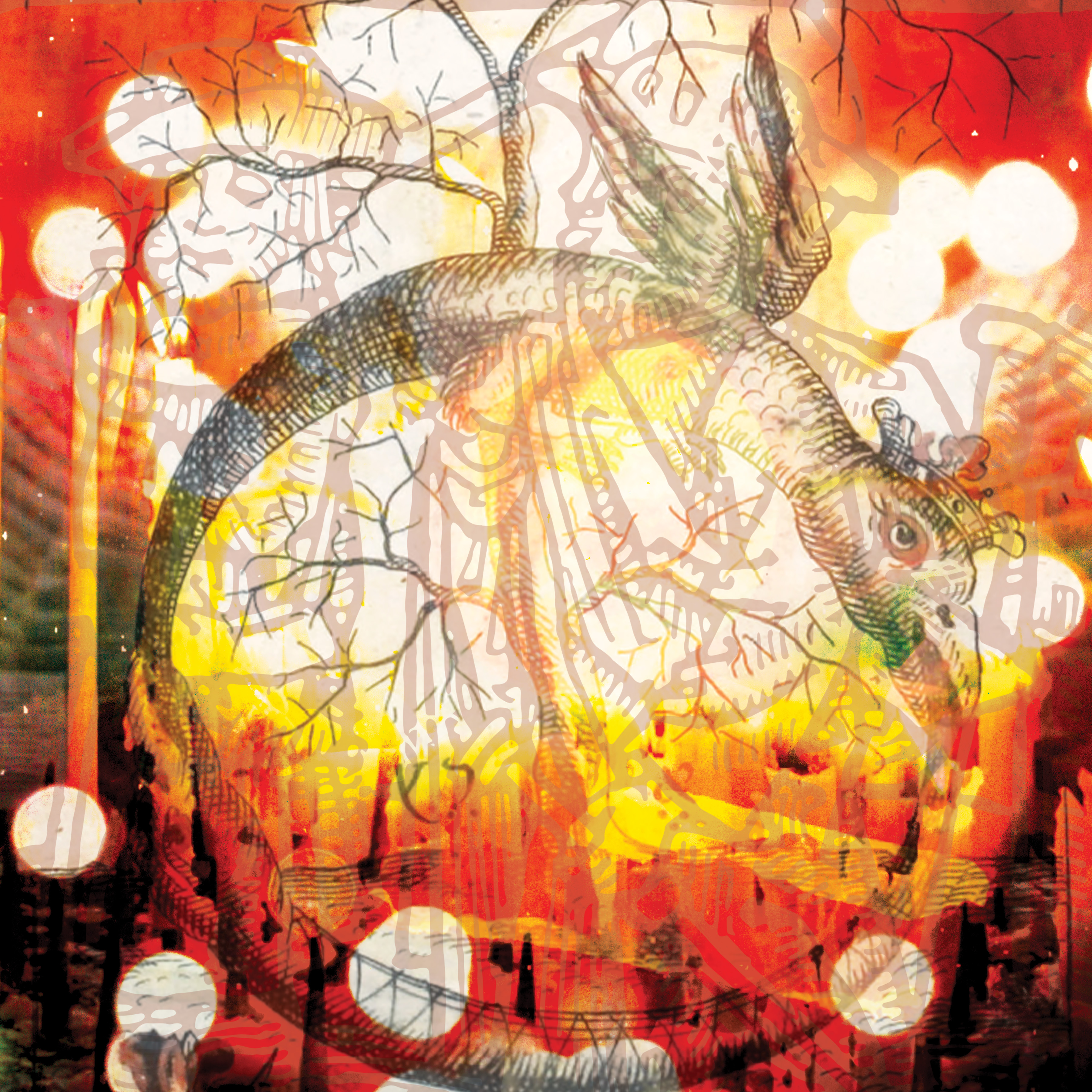
The recurring use of the snail image has drawn a lot of scholarly interest after the recovery of journals from the Bell expedition about the Milk Slug. Though some experts claim that the spiral signifies the process of recursion only, there are others who believe that the snail symbolizes memory and every new spiral contains the information of all old spirals within its increasing dimensions. The presence of Ouroboros thereafter shows that the spiral and circle are not opposite in any sense, but complimentary representations of recurrence. Thus, some critics have claimed that the palindrome in the title works as a written representation of the same idea.
Annotation 02-07D: Drinking the Tincture
The command to "drink the tincture from the vial" is almost universally associated with ceremonial preparations involving refined Slug Milk. Bell expedition notes distinguish numerous extraction frequencies producing markedly different cognitive effects. Initiatory formulations are generally believed to have emphasized heightened symbolic perception rather than visionary intoxication. The objective was not to induce hallucination, but to temporarily soften what later Nazilic physicians termed Cynical Calcification—the progressive hardening of perception that prevents recognition of recursive correspondences. Bell Archive Fragment P-19 summarizes the intended effect:
"The tincture does not add imagination.
It removes unnecessary certainty."
Annotation 02-07E: Exorcising Angels
Perhaps the fragment's most controversial passage concerns the assembled participants "praying for the angels to be exorcised." The inversion has perplexed commentators for generations. Orthodox Bell scholars argue that "angels" here denotes inherited certainties mistaken for divine revelation. To exorcise them is therefore to relinquish comforting but incomplete cosmologies before encountering deeper realities. A minority school maintains that the angels represent recursive archetypes whose continual intervention prevents humanity from escaping the Cycle. The Department declines to endorse either interpretation, noting only that Nazilic literature consistently treats certainty as spiritually more dangerous than ignorance.
Annotation 02-07F: The Melting of the Senses
The declaration that "their ears will melt and then their eyes" appears in several unrelated Bell manuscripts and is generally classified as a recurrent Phenominomic expression. Modern scholarship recognizes the phrase as an example of what the Department terms Reflective Convergence, wherein identical symbolic language emerges independently within multiple cultural traditions. The persistence of this image has frequently been cited in support of the Doctrine of Reflection, according to which certain archetypal expressions inevitably recur wherever individuals approach the underlying architecture of the Cycle. Bell Archive Note H-41 comments only:
"The quotation is less important than the reason it refuses to disappear."
Annotation 02-07G: The King in Yellow and the Queen in Red
The appearance of "The King in Yellow and the Queen in Red" has long been regarded as one of the fragment's most significant pairings. Scholars generally agree that the verse invokes two recurring sovereign archetypes preserved throughout widely separated bodies of literature whose authors are believed never to have shared a common tradition. According to the Doctrine of Reflection, such convergences are neither coincidence nor literary borrowing, but evidence that certain symbolic structures emerge repeatedly wherever observers approach sufficiently close to the architecture of the Cycle.
The Yellow King is commonly interpreted as the sovereign of revelation whose presence dissolves the distinction between reality and performance. Encounters with this figure consistently precede episodes of expanded perception, ecstatic madness, or irreversible awakening. By contrast, the Queen in Red is usually understood as the sovereign of imposed order, judgment, and unquestioned authority. She appears wherever arbitrary law hardens into certainty and living imagination is compelled to submit to inherited structure. Although later commentators frequently portray these figures as adversaries, earlier Bell manuscripts suggest they may instead represent complementary expressions of the same recursive process: revelation without restraint inevitably collapses into chaos, while order without imagination calcifies into tyranny.
Several Bell archivists have proposed that the two marks bestowed during the Rite symbolize the initiate's obligation to carry both tendencies simultaneously. One mark reminds the seeker never to mistake consensus for truth; the other cautions against surrendering entirely to vision divorced from discipline. A surviving marginal note, attributed to Edwin Bell, concludes only:
"One crown dreams.
One crown commands.
The initiate must learn to wear neither."
Annotation 02-07H: The Broken Crucible
The line describing the crucible's breaking has generally been understood as the ritual's central moment. Throughout Nazilic literature the crucible symbolizes the bounded self—the vessel within which identity is refined through ordinary experience. Its destruction therefore signifies neither failure nor death, but the abandonment of fixed identity. Several Bell scholars compare this moment to the awakening of iterative memory described elsewhere in the Archive, wherein accumulated lives flood consciousness simultaneously. One anonymous archivist writes:
"The vessel is broken only after it has finished making the thing it was built to contain."
Annotation 02-07I: UroborosoroborU
The palindromic title has received almost as much scholarly attention as the composition itself. While obviously invoking the ancient Ouroboros, Bell philologists argue that its symmetrical construction is not merely decorative. Read forward or backward, the word returns continually toward its own center without privileging either direction. This has been interpreted as a linguistic demonstration of recursive time, wherein beginnings and endings exchange places depending upon the observer's position within the Cycle. One Bell lecture delivered in Portland during the late twentieth century concluded with the observation:
"Every initiation appears to move forward.
Only afterward does the initiate discover they have been walking toward the beginning all along."