Production Notes
Guitars, Bass, Lyre, Lyrics, Vocals: PS Perkins
Drums and percussion, detuned autoharp, keyboards: R Thomas
Mixed, mastered and produced by Mystic Tape Deck ©2026
Lyric Sheet
The chariots lie broken, exhausted from war
The wheels rolled off in the mud
In the morning all good things are good
The sun warms up the mud
Stillness is raptured in all its arising
The seeds grow up from the mud
In the morning the dawn weighs a feather
The insects hatch from the mud
The hunger for sunlight draws flies to the surface
The babies wake up in the mud
In the morning from green murky waters
To wiggle around in the mud
Bones growing hollow, the gills turn to lungs
Gasping for breath in the mud
The fins turn to legs the scales turn to vellum
As feathers shake loose from the mud
Fly high, all you flying high birds
While the warm western winds are beneath you
Oh you soaring high birds
The sky coming down to greet you
We’re all dying to meet you
The bird, the great swooping bird
Beak open, gobbling gold
Oh you soaring high bird
The north winds are growing cold
Feathers flush with colors bold
Now pretend you are the sun
Feathers flush with colors bold…
Now pretend you are the sun
The southern winds, the washboard clouds
Diving daringly during the day
Teetering upon the tip of the tree
The seasons will have their way
Tail feathers turning to gray
Scatter little birds, oh you tiny little birds
The easterly light is encroaching
Seeds spilled upon the ground
With the end of the autumn approaching
And the seasons must have their way…
Now pretend you are the sun
And the seasons must have their way…
Now pretend you are the sun
And the seasons must have their way…
Rider’s final horse has ridden
Puzzle finished, last piece hidden
Oysters chatter on evening tide:
“I’m Desdinova and I confide,
I am the one you warned me of
I am the leak and the long lost love
And I am the one who will never lie
Deathless, I may never die
By lizard lens and crystal rope
You know me by my telescope”
Scattering stars in hand she shouts:
“The play is what it’s all about
Behind the clock with arms stretched tall
The script is on the western wall
Behold the light that never warms
You’ve been warned, I am the storm”
So raise up your chalice and toast to the moon
And sing to the stars as they flicker and loom
O! Irony! O! Tragedy!
Aching knees don’t fail me now
We slayed the vile dragon who lived in the skies
We bathed in its blood and we pickled its eyes
O! Devilry! O! Revelry!
If my friends could see me now
O! Bravery! Camaraderie!
The last lotus eaters recline in the sun
The race to return has been finally run
Finality! Causality!
Swept away on swaggering swans
Addendums
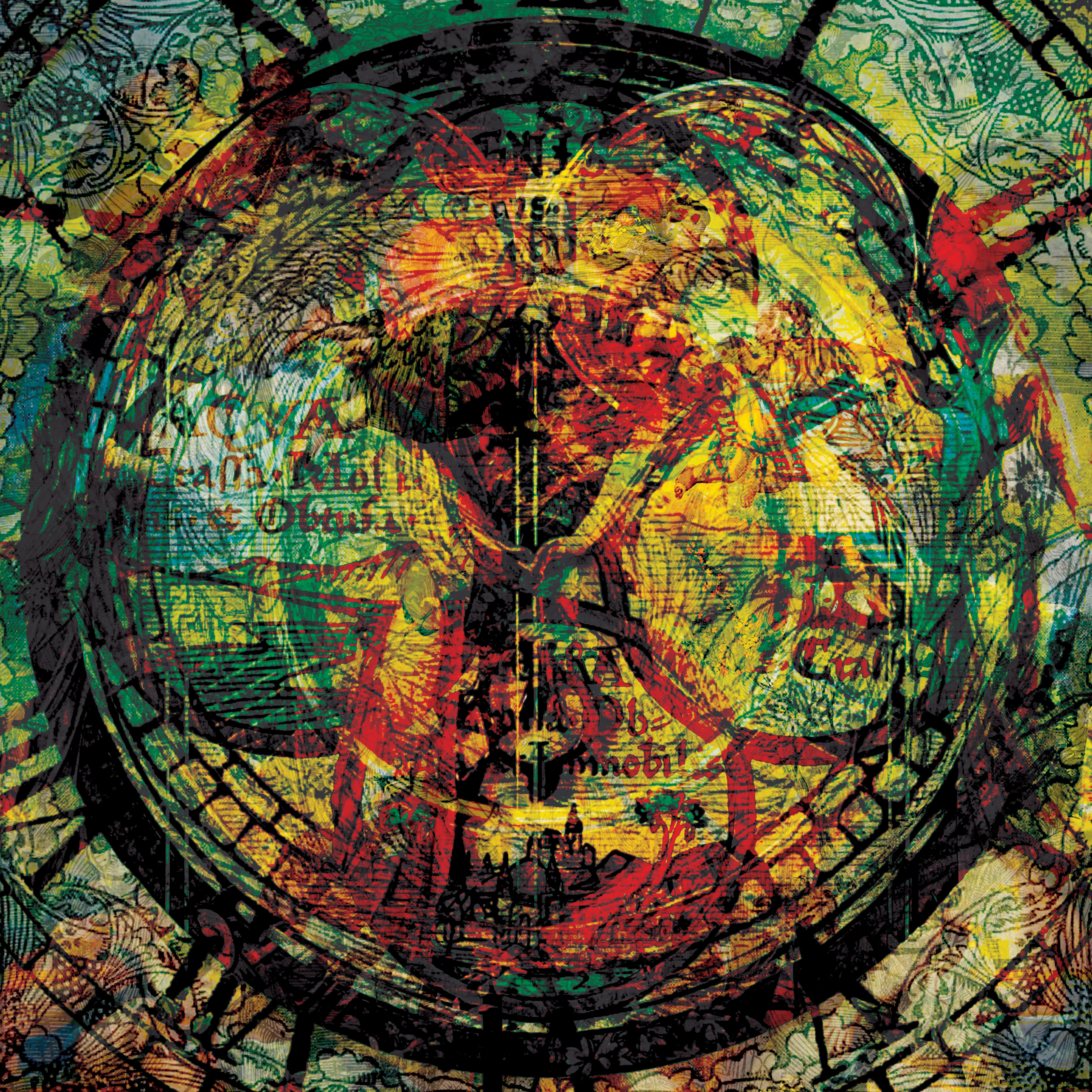
The Clock of the Four Winds — The Turning
The Clock of the Four Winds represents time as a force that does not merely pass, but turns. Its four winds mark the perpetual directions of existence: birth and death, beginning and ending, departure and return. To consult the clock is to ask not when something will happen, but which way the world is turning.
As a Nazilic Arcana, The Clock of the Four Winds symbolizes cycles, recurrence, and the terrible possibility that history is not repeating itself by accident. It is the instrument of the returning age. Its hands measure something older than hours.
Upright: Recurrence. Cycles. Cosmic timing. The return of what was thought finished.
Reversed: Stagnation. Broken cycles. The inability to escape repetition. Time turned against itself.
The question of the Arcana:
If the world has turned this way before, what makes you believe it will turn differently this time?
The clock of the four winds is a tall-case grandfather style clock originally assembled in 1710 by an Italian astronomer and mathematician named Ricco Foscari, a direct patrilineal descendant of famed explorer, vintner and occultist, Cosimo Foscari. The magical properties of the clock were such that when its hands were moved and positioned in certain configurations, it would trigger remote viewing events which would be projected onto the glass panel cover. The clock was also rumored to serve as a sort of “beacon” used for summoning an other-dimensional being named “Desdinova” who acted as a sort of intermediary between detached yet interconnected causal timelines.
It was the sole surviving relic of a devastating fire on the Foscari estate, where it sat in the wreckage, everything burned to ash around it while the clock itself remained unscathed. It was recovered by surviving members of the Foscari family when, unaware of the clock's mystical properties, the family sold it at auction. It traded hands for over two centuries before it was purchased by an English collector Franklin Bell for the sum of 20 British pounds after world war two, when it was once again found strangely undamaged, amidst bombed out rubble and toppled buildings in Stepney, London.
After Franklin Bell’s acquisition of the clock, it sat against the wall for several decades through the mid 20th century - in a bar named “The Four Winds” in Long Island, New York - which in the 1970’s was frequented by the area’s various motorcycle clubs. The clock was positioned to disguise a hidden doorway which led to a series of secret rooms and underground passageways rumored to have been used for magical rituals and clandestine gatherings of powerful and subversive figures from around the world. When the hands on the clock were moved backward to the midnight position, the clock would slide out to reveal the doorway marked with unusual moon and bird shaped glyphs, as well as several arcane sigils which seemed to pulse with a subtle, bluish light.
To this day, the clock remains a staple of the infamous Bell collection, displayed in the back room of their storied museum and antique shop in Portland Oregon.
Marginalia
Annotation 04-17A: The Foscari Principle
The clock was not constructed to measure time. This misunderstanding has persisted for nearly three centuries.
Ricco Foscari was concerned with a different question. He believed that time was not continuous, but particulate. That separate moments might exist beside one another without being causally connected. Under particular conditions, however, these detached moments could be made to overlap.
Foscari called these intersections wind crossings. The four winds were therefore not merely north, south, east, and west - they were four directions through which causality could move.
Morning. Noon. Evening. Night.
Birth. Ascension. Decline. Death.
Foscari appears to have regarded these pairs as the same phenomenon observed from different positions within the cycle.
The hands of the clock were consequently not intended to indicate where one was in time. They were intended to indicate which portion of time was presently accessible.
A marginal note attributed to Foscari reads:
“The clock does not open the door. It reminds the door that it is there.”
No explanation follows.
Annotation 04-17B: On the Four Winds
The four winds are frequently misunderstood as four directions. This is the language of geography.
The older manuscripts employ a different terminology.
They describe four conditions:
The Wind of Becoming.
The world is young. Everything rises.
The Wind of Ascension.
The world discovers its strength. Everything believes it will continue rising.
The Wind of Decline.
The world discovers that strength is temporary.
The Wind of Returning.
The world becomes indistinguishable from its beginnings.
The sequence is not regarded as linear, and the fourth wind returns to the first.
This is the point upon which Foscari's notes become difficult to reconcile with ordinary chronology.
The clock appears to have been constructed according to this principle.
Its face therefore represents neither a day nor a year - it represents a life.
And perhaps, according to later Nazilic commentators, the life of a world.
Annotation 04-17C: The Clock That Would Not Burn
The clock has survived two fires. This is considered significant.
In the first incident, the Foscari estate was reduced to ash. The clock remained standing.
In the second, Stepney was reduced to rubble, and again, the clock remained.
The Bell family has never satisfactorily explained this, though several hypotheses have been proposed.
- The clock may be unusually resistant to heat.
- It may occupy a partially detached causal state.
- It may simply be extremely well made.
The third explanation is Franklin Bell's preferred explanation in public.
His private correspondence suggests otherwise.
One surviving note reads:
“A thing which survives two histories of destruction should not be assumed to belong entirely to either history.”
This observation has been cited by several Nazilic scholars as evidence that certain artifacts may possess a form of causal inertia.
Such objects do not necessarily resist destruction.
They resist ending.
Annotation 04-17D: The Four Winds and the Desdinova Problem
The name Desdinova appears only intermittently in the surviving Foscari papers. This has encouraged speculation that Desdinova was a person.
The Bells disagree.
According to the oldest surviving account, Desdinova was neither human nor deity, but an intermediary - a messenger between histories. A being capable of moving between causal branches without belonging completely to any of them.
This would explain the peculiar language surrounding the Clock.
Foscari never writes of summoning Desdinova. He uses the word invitation.
The distinction appears deliberate. A summoned entity is compelled to arrive. An invited entity chooses to.
This has produced considerable unease among later Bell researchers because ff Desdinova exists between timelines, then the Clock may not actually summon anything. It may simply make the Bell family visible to something which was already watching.
One fragment ends with a sentence of uncertain translation:
“When the fourth wind blows, Desdinova knows where we have been.”
The remainder of the page has been removed.
Annotation 04-17E: Concerning the Door Behind the Clock
There is a recurring error in descriptions of the Four Winds.
The doorway is treated as a hidden passage, but it may not be.
A passage connects two places. A threshold connects two conditions. The distinction becomes important when considering the rooms concealed behind the clock in Long Island.
Witnesses describe moon-shaped and avian glyphs, blue illumination, and architectural spaces which could not reasonably have existed beneath the bar.
No surviving Bell floor plan corresponds to the reported underground chambers. Several witnesses nevertheless insist they entered them. Some claimed to have returned years before they left. Others described conversations with people who had died. One claimed to have met himself.
Franklin Bell crossed this section out of his own report.
Beneath it he wrote:
“Do not call it a doorway merely because that is what it looks like.”
The clock was later returned to the Bell collection.
The doorway was not.
At least, not visibly.